
I sat at my mother's kitchen table on one humid Saturday morning in early July, the kind of Indiana morning where the air feels like a damp wool blanket. The basement tenant's lease was set to expire in just a few weeks, and for the first time since my father died in 2023, the responsibility of the paperwork felt like it was finally mine to get right. My father had a 'handshake and a nod' method of property management that worked for him for thirty years, but after three years of digging through his chaotic filing system, I knew I didn't have the stomach for that kind of ambiguity. I needed something written down, something that wouldn't leave my mother vulnerable if a neighborly favor turned into a legal headache.
Being a reference librarian means I live for the paper trail. In the library, everything has a call number, a place, and a clear record of when it’s due back. Property management should be the same way. When the lease for the basement apartment came up for renewal, I wasn't about to just print out a generic one-page form I found on a random search engine. I’ve learned the hard way that missing local rent control nuances or basement-specific habitability disclosures can inadvertently invalidate your entire lease agreement. If the margins are off on the legal side, the whole structure collapses. I needed a formal lease renewal that referenced the original agreement without requiring me to rewrite the entire twelve-page document from scratch.
The Transition from Handshakes to Hard Copies
My father’s filing cabinet was a graveyard of good intentions. There were receipts for water heaters from the nineties and handwritten notes about rent increases that were never actually signed. After he passed, I spent months rebuilding my mother’s records, a process I documented when I first started this journey in The Kitchen Table Law Office: Rebuilding My Family’s Paperwork After a Loss. That experience taught me that in Indiana, clarity is the only thing that keeps you out of a courtroom. We don't recognize holographic wills here, and while lease agreements are a different animal, the principle of 'if it isn't typed and signed, it didn't happen' still carries a lot of weight.
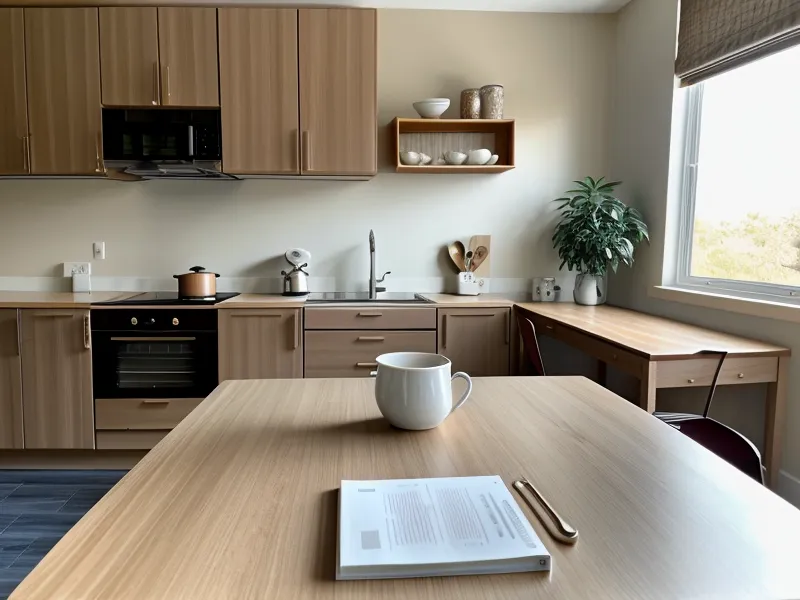
As I looked at the original lease from mid-May of last year, I realized it was a solid document, but the world had changed. Taxes had gone up, the kitchen renovation upstairs had altered the utility sharing, and I wanted to make sure we were following the letter of the law regarding the security deposit. In Indiana, we have a very specific 45-day window to return a deposit or provide an itemized list of damages. If you miss that window by even a day, you can lose the right to withhold any of that money, regardless of how much the tenant might have damaged the carpet. I wanted that 45-day rule spelled out in the renewal so there were no surprises later.
I opened up the dashboard for the legal software I’ve been using for the last few years. I’ve used it for contractor agreements and rental forms before, and I knew it had a specific path for a 'Lease Renewal Agreement' rather than just starting a brand new Residential Lease. This is an important distinction. A renewal is like a 'see also' reference in a library catalog; it links the new terms back to the original document, keeping the legal chain intact without making you re-verify every single clause about pets or parking that hasn't changed.
Navigating the Renewal Questionnaire
The process started with inputting the existing lease date. This is the anchor. Everything in the renewal flows from that original start date. As I clicked through the prompts, I kept thinking about how many 'quick favors' for neighbors in this suburban block ended in headaches because nobody wrote down the end date. People think that if the tenant stays and keeps paying, everything just continues as is. But in Indiana, if a lease ends and no new agreement is signed but the landlord accepts rent, the tenancy typically converts to a month-to-month status by default. That's fine for some, but it only requires a 30-day notice to terminate, which doesn't give my mother the security she needs for her retirement budget.
I spent about twenty minutes working through the 'Additional Clauses' section. This is where the generic forms you find for free online usually fail you. They don't account for the fact that a basement apartment in a suburban house has different requirements than a high-rise in Chicago. I needed to make sure we mentioned the specific utility split we had agreed upon during the kitchen reno. I also wanted to ensure the document was formatted for standard US Letter paper dimensions, 8.5 by 11 inches, because I’ve learned that anything else is a nightmare to scan and file in the standard folders I bought for Mom’s cabinet.
The software’s dynamic questionnaire is helpful because it asks for the property location and then pulls in state-specific language. It’s like having a very specialized reference book that updates itself. I’m not a lawyer, and I have zero legal training, so I rely on these tools to do the heavy lifting of phrasing things in 'lawyer-speak' while I just provide the facts. If you’re dealing with a complex multi-unit situation or a tenant who is already causing trouble, please, talk to a real attorney. But for a basement tenant who has paid on time for two years, the kitchen table approach works just fine.
The Indiana 45-Day Rule and Other Local Quirks
One of the biggest turning points in the process was discovering how easy it was to bake in the Indiana-specific rules. I mentioned the 45 days for the security deposit earlier, which is covered under Indiana Code § 32-31-3-12. The software actually prompted me about the deposit, and I was able to verify that our current arrangement complied with the law. It’s a relief to see those numbers—45 days, 30 days—written out in black and white. It turns a 'witness clause' from some scary legal requirement into something simple: just two neighbors who can sign with you over coffee if you want that extra layer of proof, though for a lease renewal in Indiana, a notary isn't strictly required for it to be valid.

I also made sure to specify the 30-day notice period for any future changes, which aligns with Indiana Code § 32-31-1-1. Having these specific citations, even if they aren't explicitly written as 'Section 32-31-1-1' in the final document, gives me the confidence that the paper I'm printing is more than just a polite request. It’s a binding contract that protects my mother’s home. I’ve spent the last few years comparing the costs of doing this myself versus hiring a professional, as I noted in After the Kitchen Table: A Three-Year Cost Comparison of DIY Estate Tools vs. The Billable Hour, and the savings are significant when you're just managing a single basement unit.
The habitability clause was another area where I took my time. In a basement, you have to be careful about disclosures regarding moisture or egress. A generic form might skip these, but the tool I used allowed me to add custom notes about the dehumidifier requirements and the emergency exit path through the side door. Missing these details doesn't just make for a bad lease; it could potentially invalidate the whole agreement if the tenant ever claimed the space wasn't 'habitable' under local codes.
Final Print and the Signature Over Coffee
Once the draft was finished, I did a quick print test. I’ve rage-printed enough forms in my life to know that the margins can be a fickle beast. I loaded the tray with 24lb bond paper—it’s a bit heavier than the standard 20lb paper we use for hold slips at the library, and it makes the document feel more substantial, more official. I heard the low, rhythmic thrum of the laser printer in the spare bedroom as it pulled the 24lb bond paper to print the final agreement. It’s a satisfying sound, the sound of a job being finished correctly.
The final document was a crisp, two-page agreement. It was professional, clear, and didn't require a law degree to understand. We invited the tenant up for coffee later that afternoon. We sat at the same maple table where I’d spent so many hours sorting through my father’s old tax returns. There was no tension, no confusion. We went over the dates, the rent adjustment, and the 45-day deposit rule. Everyone signed, and I made two copies—one for the tenant and one for the 'Rental' tab in my mother’s rebuilt filing cabinet.
The relief that comes with professional-grade clarity is hard to overstate. My mother doesn't have to worry about what happens if the tenant decides to move out next year, and I don't have to worry about whether I missed a state-specific deadline. We have a paper trail that would make any librarian proud. It’s just one more piece of the puzzle in getting my family’s legal life back in order, one kitchen-table document at a time. If you're doing this yourself, just remember to check your local rules, take your time with the 'additional clauses,' and always, always keep a copy for your own records. I'm not a legal professional, just a daughter who got tired of high hourly quotes for things you can do yourself with the right software and a little patience.